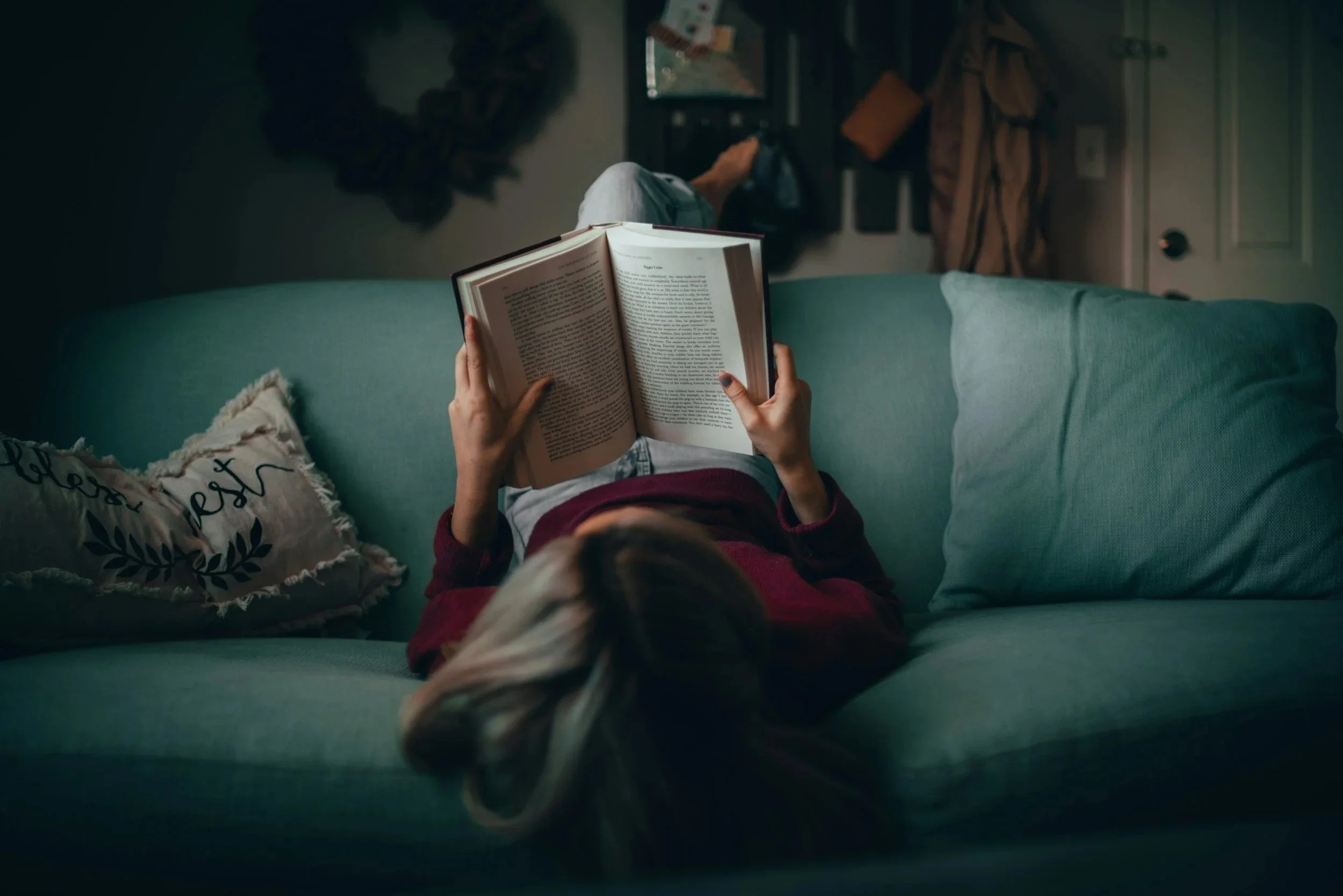
Empathy Through Books
What a Teenage Detective Can Teach Us About Understanding People We'd Never Be
By Sam Minhas
Scrolling through BookTok recently, I came across a comment that stopped me mid-scroll. A reader explained that she avoids books written in first person, because she can never relate to a narrator who does things she herself would never do. At first, this seems like a reasonable preference. But it points to a much bigger question about why we read fiction in the first place, and what empathy actually requires of us.
Here is the distinction that comment missed. Empathy was never about agreeing with someone. It is about understanding them. You can fully grasp why a character made a choice, feel the weight of the pressure they were under, and still know you would have chosen differently. That gap between understanding and approval is not a flaw in the reading experience. It is the entire point.
This is where Pip Fitz-Amobi comes in. The narrator of Holly Jackson's A Good Girl's Guide to Murder series starts out exactly like her nickname suggests: a rule-following, straight-A student who takes on a school project reinvestigating a closed murder case. But across three books, Pip's choices grow harder to defend. She breaks into houses. She blackmails people. By the final book, she has crossed a line most readers will never come close to in their own lives. A first-time reader, especially one who reads to see herself reflected on the page, might close the book the moment Pip does something unforgivable. But readers who have spent time with complicated narrators before know better than to stop there. They keep reading, and in doing so, they practice something most of us rarely get to practice in real life. Understanding a person's full context before deciding what to think of them.
Pip's story is also carried by the character of Sal Singh, a boy the entire town condemned as a murderer without a second thought, and his brother Ravi, who spent years being treated as guilty by association. The town's rush to judgment is the opposite of empathy. It is certainty without curiosity. Pip's investigation forces both her and the reader to slow down and ask what actually happened before deciding who deserves compassion. That, more than any twist in the plot, is the real mystery the series is solving. Not who did it, but who we decide to understand and who we write off too quickly.
This is also why the divide between avid and new readers on BookTok matters more than it might seem. Avid readers have logged hours inside minds nothing like their own. That repetition builds a kind of muscle. The more first-person narrators you sit with, flawed ones, frightening ones, ones who make choices you never would, the easier it becomes to separate the discomfort of disagreement from the value of understanding. New readers are still building that muscle, and that is not a criticism. It simply means the payoff of fiction, the real emotional stretch of it, is still ahead of them.
So the next time you pick up a book with a narrator who makes a choice you cannot imagine making yourself, resist the urge to put it down. Sit in the discomfort a little longer. Ask what brought them there instead of deciding who they are. Pip Fitz-Amobi never asked her readers to approve of her. She only asked them to understand her. That is the whole difference between judgment and empathy, and it is a skill worth practicing, one flawed narrator at a time.